

New Alliances
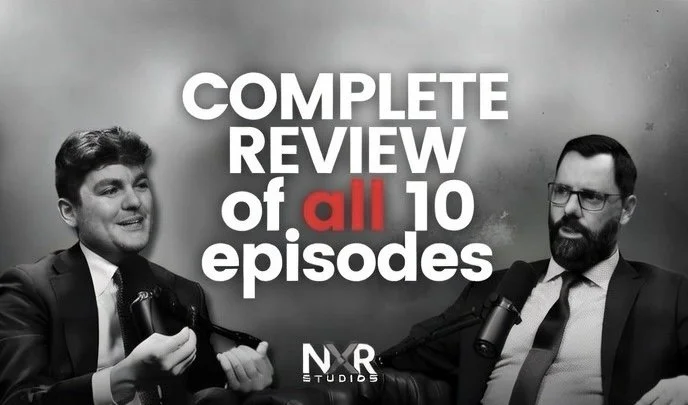
Takeaways from the 10 episode series crossover between Joel Webbon and Nick Fuentes
Opening Reflections:
I've immersed myself in Pastor Joel Webbon's extended interview series with Nick Fuentes over the last 48 hours. My goal is to provide a concise summary of each episode, along with a short takeaway with an application for viewers of the episodes and readers of this blog.
A good thing to note about these ten interviews is that they use a casual, discussion-style format rather than a formal interview. Webbon asks many questions throughout, but knowing that this series is a rather even back-and-forth between the two is helpful to understand going in. This isn’t your typical “grilling Fuentes” for an hour type of deal we have seen over the last year. Still, this functions as two individuals who are seemingly friends and are discussing, not debating, ideas and goals to move the nation forward, that is a Christian America.
I will engage directly with quotes and paraphrase what was discussed, and try to keep my personal commentary in line with the points each made throughout.
Episode 1: Christian Nationalism Meets America First - A Slow Start
I will keep my comments short on Episode 1 since it has been widely discussed since its release. This first installment served as an introduction of sorts and felt a bit like a throwaway episode in comparison to some of the following episodes in the series. The surprising takeaway was that Fuentes opposed the death penalty. There is a need to mature his discernment of Scripture regarding the law.
This was a bit of a moment of noticing for me: a continual pattern throughout the series that Fuentes does not seem to have much connection between Scriptural conviction and knowledge, and between applying it to his views on politics. This is where Webbon, thankfully, would continue to chime in and connect the dots for Fuentes, but it is worth noting that the man who professes to be a serious Catholic never once (to my remembrance) referenced Scripture to back his political theory. All of the Scriptural backing came from Webbon, with Fuentes then agreeing afterwards.
In fairness, Fuentes is not a pastor nor claims to be a theologian, but I was hoping to see his Catholic conviction more on display throughout the ten hours of content.
Episode 2: Catholicism vs. Protestantism – Building Bridges for the Fight Ahead
In episode 2, Webbon and Fuentes get the big-picture idea right: there are bigger battles right now than doctrinal nitpicking.
The differences between Catholicism and Protestantism are stark—each sees the other as wrong on core issues, and neither Fuentes nor Webbon backed down on their convictions. Fuentes even questions if Webbon's views ensure his salvation, but he refocuses on the essentials: salvation depends on faith in Christ's redemptive work on the cross, not labels.
Personally, I've worked alongside devout Catholics who live out their faith with genuine love for Christ, and I stand by that—they're brothers and sisters in the Lord. Significant theological gaps exist, no doubt, and I will not say they are not of importance, but the Catholic-Protestant divide needs healing where it matters most, and it needs it yesterday. The Webbon and Fuentes example shows that Christians unified by love for Christ and shared political goals must work together. Those age-old debates can wait; the real fight is happening now. I thought this was really the “first” episode, as the opening episode gave more of an overview of what was ahead, it was a big picture kind of deal, which is why I started here.
This episode is strategically placed at the very beginning of the series to clearly expose the elephant in the room, which is in full display, and to hash out that both of them see it. However, both Webbon and Feuntes recognize it's not the moment to discuss the elephant. Instead, the focus should be on the world where the elephant exists—a world that is decaying and will disappear if Catholics and Protestants don’t stop bickering with each other.
This was the main conclusion of the series, made concrete in episode 2. The series establishes and focuses on the unity between Catholics and Protestants to understand both pragmatic political solutions from Fuentes and Webbon's input on Biblical ties and exegesis to warrant and support each way of thinking and action, providing an excellent balance for any Christian who seeks to understand how to think and act politically in our current America.
Episode 3: Masculinity – Strength Beyond Contingency
Fuentes hits the mark at 10:50: He questions whether masculinity is connected to the women in your life. The answer, he suggests, is a firm no. True masculinity, in his view, depends on independence—a fundamental strength that isn't defined by having a wife or family. Fuentes’ choice of celibacy resonates with me; it feels like a rare gift from God or a personality trait that has been cultivated for it, but in either case, he appears genuine.
Their conversation about the risks and rewards of marriage is particularly insightful, especially coming from a controversial figure like him. For Fuentes, the potential disadvantages outweigh any superficial complaints about women from younger generations. Instead, he presents a thoughtful analysis of the vulnerabilities that come with marriage and raising children.
This episode reveals a more human side of him, far beyond the short clips that often reduce him to a caricature in culture wars, that he hates women, hates marriage, and hates family. I did not get that impression at all from him, and actually, for the first time, admittedly. There’s genuine warmth here; his celibacy can be seen as the ultimate act of masculine protection—sacrificing something highly valued for a higher purpose. It's a profound stance, rooted in biblical values. Webbon does a great job in coaxing the conversation along to reveal that Fuentes values and cherishes the Biblical family unit, but has thought about how uniquely challenging (and I agree with him in his case) the dilemma is for him in pursuing that as a part of his life that gets daily threats of execution.
This was the first time I saw Fuentes show genuine care and deep thought about the importance of family, and how, even if he desired it, he believes the more mature and masculine move would be to abstain for the safety of those he would let into his life. This was the only episode that gave me some sad undertones. I know Fuentes would never see himself in that light regarding this matter. Still, it made me thankful for the family that God has blessed me with, and grateful for men like Nick Fuentes, whether true or not by God, sees his position and duty to proclaim political truth as the sacrifice that must be made for having a family—one that most men don’t have to make.
This discussion always leads to the various claims of Fuentes being a homosexual, a Fed, and then attacking his followers for their immaturity, misunderstandings of biblical familial hierarchy, and commands given to us by God. In this episode, each of those claims arose, and Fuentes denies all of them and counters with what appears to be sincerity in how he has thought about them in a serious, “non-meming-persona” sort of tone. I believe the claims are somewhat valid, but as they stand, I am taking him at his word and trusting that it is the truth. This episode has helped me avoid the possibility that those accusations are true of him. However, I still hold that his followers are, as a whole, incredibly immature and lack a true identity of their own. I mean, “Groypers” as a word in itself has always sounded pretty gay to me, and that has not changed when you see how his followers are a want-to-be caricature of Fuentes himself.
Whether what Fuentes outlined in this episode is true will be judged over time, and how his followers respond to adopting his sentiments or rejecting them will also be telling.
Episode 4: Conservative Grifters – Authenticity Over Pragmatism
True visionaries grasp the broader perspective in ways that pragmatists never can. This episode emphasizes the vital importance of authenticity among our political and spiritual leaders. Developing keen discernment is essential for recognizing subtle or outright malicious patterns. Superficial appearances should no longer fool us—demand genuine integrity.
This was one of the weaker episodes for me, not because I don't believe what was said wasn’t true, but because it wandered and needed a more straightforward guiding principle for its talking points. The part I highlighted in the review summary comes from a small section discussing Kanye West’s ostracization from opportunities and society at large, and as an artist, what Fuentes mentioned resonated with me — it's an undervalued truth that creatives have the power to change the world through their art.
While I don't intend to assess the impact art and music have had on our lives and the world in this review, it’s worth noting that Christians have long overlooked the power of the creative arts, which can be a tool for building Christian Nationalism. It’s a role that must be recognized and embraced for society to be truly Christian. We are all shaped by the humanities that influence us, and Fuentes touched on these aspects in the episode, which I want to explore further. I believe the concept of conservative grifters becomes clearer in episodes 8 and 9, which discuss Trump and Vance. More on that soon.
However, it’s hard not to chuckle at the timing of when this episode was recorded and how the relationship between Fuentes and Tucker Carlson shifted drastically from the day of his interview to just a few days later. The conservative grift is very much alive, extending beyond politicians to include pastors and anyone in a position of power who can gain or lose more influence.
Episode 5: What Nick Fuentes Really Thinks About Race – Realism, Not Determinism
Likely, this will be seen as the first big controversial episode. However, I am sure many more people were offended by the mere announcement and the episode one’s thumbnail.
All that to say, this was a good episode. This is the first episode to start tackling real issues within the Christian community, and one that our churches and their pastors, school systems, jobs, and corporations have gotten wrong for many decades.
The main crux of the episode revolved around the differences between racial realism and racial determinism.
Some quick definitions I think will be helpful:
Racial realism should not be mistaken for determinism, as many do; instead, it involves recognizing certain truths without guilt or apology. While individuals and groups tend to evolve gradually over generations, categorical thinking remains inherent, as in Paul's commentary on the Cretans and their distinctive sins.
You can accurately and generally describe racial groups, noting exceptions where relevant. Webbon succinctly states: "By the power of Christ and the gospel, it would be fitting that some Cretans may become faithful ministers." He uses Paul's argument for a large section of the episode, arguing that it gives us biblical permission to think in general categories to describe people, as we all do with every other aspect of ourselves and every human we encounter (more on this soon).
This concept extends to all racial and ethnic groups—whether you are discussing whites, Blacks, Jews, or Muslims—it all highlights the importance of understanding the specific vulnerabilities and tendencies associated with each. Recognizing susceptibilities to particular sins is a form of wisdom, not hatred. This is a point I have heard Webbon make in the past, and although it wasn’t explicitly stated here, it belongs being mentioned once more.
We all recognize this reality, and I will provide an example of this as we acknowledge that within races, families often carry inherited vulnerabilities, dare I say sins, such as a tendency toward alcoholism in specific lineages. We instinctively understand this; medical professionals routinely ask about family history before treating you because genetics influence health. The body and soul are intertwined; God placed us in particular bodies and lineages for a reason.
Prejudice or judgment based on racial background is not rooted in malice but in a prudent discernment which is necessary for self-preservation. Webbon and Fuentes made a reasonable claim that we naturally assign layered identities and make generalizations across various domains of life. All of us form particular connotations. They gather information about every aspect of us, including whether we are male or female, what generation we belong to, the towns or states we are from, our jobs, whether we are married or single, if we have many kids or just a few, as well as our hobbies, personal interests, and hundreds of other categories. As stated earlier, our health and internal biology are also included in this never-ending list. So why should race be considered off-limits in this examination? Why is race the only thing that our society has deemed as absolutely nothing to do with who we are and how we behave, while we recognize these determining factors are attached to every aspect of our lives?
The final section dealt with how whites have been conditioned to view themselves in relation to how every other race views themself.
Whites, uniquely, often exhibit self-criticism or self-loathing, while other groups tend to celebrate their identities. The argument from the race realists is not advocating for white supremacy or the suppression of different races; rather, we acknowledge that we are less racialized than many.
Fuentes correctly notes that whites often lack pride even in defending their nation's identity or way of life. His observations about how climate influences societal development are illuminating, and ones I had not deeply considered before. These being that northern climates necessitated strategic planning and delayed gratification for winter survival.
In contrast, the more relaxed, day-to-day living typical of southern regions did not, thereby describing how geography shapes civilization's pragmatic traits and how those traits have led to advancements in some civilizations, higher IQs for some, or the lack thereof, and growth in these areas for others.
Webbon agrees with Fuente’s assessment and adds to the biblical context by discussing the family lines through Noah's sons.
I was curious to see where this section was going and found some great resolutions to this debate that has been circling Christian circles for several years now. Webbon doesn’t state whether he believes it was a curse on Ham or a curse on Canaan; instead, he focuses on the fact that, even if there was a curse on Ham’s descendants, Jesus's sacrifice wipes it out and levels the playing field.
Webbon continues by saying that while no specific blessings are given to Ham's descendants, the gospel makes everyone equal in a salvific sense, but it takes time to undo generations of effects, especially for those with non-Christian backgrounds.
The main takeaways of the episode that both men want viewers to understand are that race is real and meaningful, the Bible supports it, and ignoring that isn't smart. Christ's work offers salvation to all, but personal and community change happen slowly, yet they are possible. If you come from a faithful generational legacy, your job is to uphold it and pass it on to your children. If your familial legacy is mainly unfaithful, you will face different obstacles, but you can and should tackle them. Do the next right thing so that later on, your descendants can thank you for being their ancestor.
Episode 6: Race, National Identity, and WWII – Balanced Inquiry, Not Hysteria
I am sure this episode will be another talking point of controversy, as I have often described that discussing the Post War Consensus and Adolf Hitler or Nazi Germany is the Harry Potter societal equivalent of uttering Voldemort, the name that shall not be named, ever. The dialogue was balanced and not hysterical. A calm collection of thoughts regarding race and what it means to have a national identity, and what the Christian response to all of this may entail.
The episode began with identifying that race and national identity don't mean we're heading toward another version of Nazism— that's just leftist paranoia, as both Fuentes and Webbon agreed upon. Fuentes gave some helpful background on countering the public school social studies arguments that were given to millennials and Gen-Z regarding America’s role in WWII (as a public school kid, I can attest that what Fuentes laid out is the opposite of what was shoved down my and millions of other millennials' throats in these public institutions).
He continued by saying that the idea that America’s story about WWII is a heroic effort to free others from oppression is actually a lie; our moral high ground wasn't the real reason we got involved, we got bombed at Pearl Harbor, and had that not happened, we likely would not have entered.
Webbon and Fuentes then take a calm, straightforward look at Hitler and Nazi Germany without trying to erase the claimed atrocities, just presenting what I would call the standard and balanced view of WWII for those who challenge the PWC. It was stated and agreed on by both of them that "I support everything Hitler did that was biblical, and for everything that wasn’t, I don’t support it."
I see this as the position most in the New Christian Right camp hold, which reflects how most people question official histories. Still, by doing so, they are not idolizing Hitler as some Christian prince, as I think the likelihood is far-fetched; they are honestly acknowledging the possibility of terrible crimes while also noting his role in rebuilding the nation from near ruin. As the leader of a country that was 95% or more Christian (more than America at the time, mind you), he used Christian rhetoric in his speeches accordingly. Was he sincere or just playing politics? Maybe and likely a bit of both. His people, however, were essentially all Christians, and there is something to be said for that fact, and I think it should be explored in further discussions.
Although that particular fact was not discussed in the episode, from online observations over the last couple of years, this seems to be the driving force behind the appreciation of Nazi imagery. They look at the strength of the leadership, the Christianization of the people, and the society in which they were thriving, a deep care for one’s nation, and they find the appeal; it does not surprise me in the slightest why, given we live in a country that largely opposes all of those virtuous attributes.
America has a history of great individuals who have fought for such ideals, and our modern people are hungering for a place where this has been made apparent. I think the urges towards the younger generations and those of WWII Germany are a desire for the virtuous characteristics they possessed, and a wish that the attributes of love for one’s nation and people be acquired today by our leaders. Like the discussion in this episode, I do not see a massive revival towards Nazim, but people are hungry for leadership that cares about them as heritage Americans.
My thoughts on this episode's subject are not exhaustive, and it is one of, if not the greatest, controversies of our current age, as it ties into the second controversy: race. The truth of WWII's historical record is currently up for grabs, and I have not done much research on it, but I think, given time, the tension between conflicting evidence and truth claims will make itself known to all, however it ends up shaking out. Right now, Millennials and Gen-Z are following the “we have been lied to about virtually everything our entire lives” mantra and applying it to everything. Admittedly, this strategy has an excellent track record of being correct thus far. Time will tell if it holds for WWII.
Episode 7: The Particular Sins of Particular People – Legacy Over Blank Slates
This whole idea of a blank slate has really held us back—there's no other way to put it.
In this episode, they subtly compare creationism—where God personally creates each soul, making them unique—which many Reformers believed, with traducianism—where souls are inherited from parents, carrying forward ancestral traits—something Augustine and Luther supported. Webbon's closing monologue is the highlight of the series: legacy matters above all. If you start one, stick with it—God might take thousands of years to bless your line. If you come from a Christian background, protect it fiercely; keep it going and improve it. Your will isn't entirely your own; your choices are shaped by nature. This is where theology meets politics: Scripture influences how we see race, tribes, nations, and heritage. We're not just blank slates capable of anything; our hierarchy, generations, and ancestral culture shape us. Much of our lives are already set by this—free will exists, but within the paths God has laid out through our ancestors. Honestly, this might be the best episode for blending faith with real-world struggles.
Episodes 8 and 9: Trump Isn't Our Guy, and Neither Is Vance – No More Settling
These episodes were informative to me in exposing the scam of our government, particularly the conservative side.
In these episodes, Fuentes primarily speaks. He notes that conservatives were completely off in their hopes that Trump would be "our guy" in Episode 8. In Episode 9, Vance is also torn apart, talking about his background in ‘Hillbilly Elegy,' Peter Thiel's funding, his Yale connections, his history of never supporting Trump, and even his name change—all of which make him seem like a manufactured elite. Episode 9 piqued my interest more, as Vance seemed to appear out of nowhere for the nomination. I follow politics probably more than your average individual, and I had never heard of him when he was announced as Trump’s running mate. Take that for what it is, but his ascendancy seems off, and should be investigated before people make him “their guy.”
Fuentes asserts that this is exactly the conditioning his assentancy is trying to convey to conservative voters.
Fuentes continues to say that Vance’s book, the show, and Thiel's money and power have basically set him up for the presidency. Thiel's $15 million basically bought Trump's endorsement. Fuentes emphasizes that Vance is just a fake opponent created by the system to look like he’s fighting the elites, and your average normy conservative is too gullible to see what is really happening.
Webbon points out that his marriage to a practicing Hindu Indian and their Indian-named children show he’s not fitting the traditional Catholic role, and the inconsistency in him publicly declaring creeds and even the Ordo Amoris, meanwhile being married to a woman who is Hindu feels fabricated and forced.
The conversation shifted to Fuentes essentially saying things need to get a bit worse before they get better. Meaning we should not vote for the typical GOP nominee we always get; it isn’t too horrible, but it isn’t great either. This cycle of mediocrity is why our nation has folded into its current form, and I could not be more in agreement.
So, will conservatives accept any lies from the GOP for the sake of just “winning” an election? No, we should hold back votes until they actually deliver. Fuentes even suggests voting for Newsom to push for real accountability—because Republicans work for us, not the other way around. The naive base tends to lose even when they win because they don't understand how leverage works. Fuentes’s main point was that the GOP needs to earn our votes.
I supported Trump in 2024, but Fuentes' idea of destroying the party is starting to make sense—if they ignore demands, then let it burn.
Fuentes concludes that Vance gives off Obama 2.0 vibes: he is slick and polished, regular enough to relate to ordinary people by being from Ohio while being educated enough to translate to elites, chameleon-like, constantly calculating how to gain approval, and willing to lie to stay in power.
There is a lot to think through as Vance will likely be the nominee come voting time three years from now. My goal is to watch him more closely. I highly doubt I would go Fuentes’s route and deliberately vote for the opposition. Still, I think the abolitionist mindset of all or nothing is starting to make more sense to me, and may be the only way our government officials learn, and our nation can actually get a Christian leader. Perhaps it does need to get even worse before we see rejuvenation sprout out of the ash pile.
Episode 10: Hide Your Power Levels – Strategic Silence for Impact
Red-pilled young men often get fired up about politics, sovereignty, race, or faith and feel the need to share their views with friends, family, and on social media. Being one of them myself, I agree with their sentiment, and part of the reason I am inclined to be a vocal person is a deep sense of calling to not keep things to myself.
The vast majority of individuals do not need to put their livelihood in jeopardy for being correct online or to a family member, co-worker, etc. The Lord knows your heart, and knows if you are right, and young men should seek, if that is their station, to be content in such a place between themselves and God. If God has blessed you with gifts of proclamation or teaching, this may be what you are called to do. Still, even within those gifts, I think discernment and caution should be your priority, as every opinion that is not mainstream, regardless of whether it's liberals or so-called conservatives, will seek to destroy and ruin your life.
Fuentes points out that while passionate Christianity is virtuous, you shouldn’t broadcast every thought, because our cancel culture tends to shut down these opinions early on, leaving you sidelined before you even get started.
Instead, focus on connecting with power centers like YouTube, government circles, Hollywood, or big firms—places where influence really counts. While keeping in mind that money and status often matter more than your current job, be cautious not to self-sabotage and let time work in your favor. Study deeply subjects of interest, but also learn when and how to apply what you know wisely.
Final Summation: Personal Thoughts on Fuentes and Webbon
The standouts are Episodes 3, 5, 6, 7, and 9.
The other half of the episodes were fine in varying degrees, but the main criticism is that they lack a clear north star: the discussion meanders and does not address the topic with the same depth as the standout episodes.
Thoughts on Fuentes:
This was a different form of him. Perhaps it was the format (I assume they filmed all of this in one day), so maybe there was some tiredness or exhaustion, but he was laid back and seemed reserved, which I was not expecting. This is neither a criticism nor a compliment, just a pleasant observation that his temperament was calm and collected, rarely resorting to sarcasm or joke-making over ten hours of dialogue. Since it was not his platform, I am sure it was discussed to keep the “engagement farming” attitude down.
That said, this is the side of Fuentes that is personally more appealing to me. He is 27 years old now, and he is not a college student or even fresh out of college. He has millions who watch and follow him, and he is a leader who should consistently make the charge to act in this way.
I am not here to debate the authenticity of his faith, but his actions and words do communicate immaturity when he is explicitly half-hazardous about cursing or using racial slurs, and in fact, promotes it on his merch. I understand his point to a degree that they are “just words.” Still, Scripture is also words, and those words of Scripture command us to have a better guard of our tongues, and if given a leadership status, it comes with a certain responsibility of demeanor.
I am pulling for the advancement of the Gen-Z generation, particularly the men. As a Millennial, I hope the older generations can see our zeal and recognize a level of maturity that is contagious. Zeal with maturity. This does not mean we can never joke around or have moments of passion in our speech. But the time to put away childish speaking and demeanors was yesterday. Present yourself as you did throughout this show, and hopefully, you will grow in your spiritual recognition that this was the correct way to behave all along.
Thoughts on Webbon:
Webbon conducted himself well throughout. His strengths in the series were his continued commitment to bringing Scripture into each episode and conversation. This was needed because Fuentes would often speak from his own vantage point or that of history, and having Webbon to bring God back into the conversation helped keep that Episode One promise: America First meets Christian Nationalism.
He gave some strong monologues throughout the ten-part series, particularly Webbon’s final 10-12 minutes of Episode Seven, which stands as a highlight of the entire series for me (I will not spoil it; you will have to wait a couple of months).
However, in particular Webbon fashion, he is long-winded. A feature I have grown to see as enduring, but there were plenty of moments in the weaker half of episodes that he could have used to ask more questions to streamline the depth of the conversation, rather than venturing down into rabbit holes that did not need exploring.
His temperament was also relatively calm and mild. Again, I am not sure whether this was due to the marathon filming format of ten hours of content in a single day, or to intimidation from being with Fuentes and fear of offending him. This is speculative, and I do not want to explore it too deeply, but it is a criticism that I wish he pressed Fuentes harder on Catholic doctrine in Episode Two, on his comments that revolved around degrading and laughing/mocking Christian family structures in Episode Three, and on his comments that he is considering voting for Gavin Newsomin Episode Nine.
There were other instances I could include in this list, but those are the three most significant moments for me that needed to be addressed and further investigated.
The interview questions were great for the standout episodes noted, and there was plenty from the series that helped reinforce some ideas and made me question and consider a different perspective. This was not groundbreaking in terms of content. Yet, the most interesting aspect will be the alliance itself, which will hopefully bring about real change desperately needed across all the topics outlined.